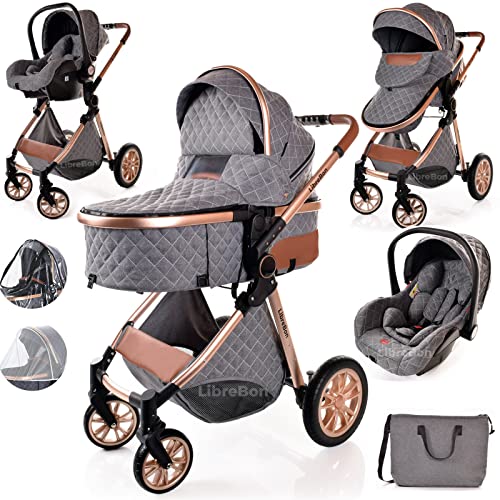
How To Get More Benefits With Your Prams For Newborn
A Comprehensive Guide to Prams for Newborns
As a brand-new parent, choosing the appropriate pram for your newborn can be a difficult task. With numerous alternatives readily available on the marketplace, each boasting special features, it is vital to make an educated decision that matches your way of life and the requirements of your child. This article works as an extensive guide to prams for newborns, helping parents navigate through various options, features, and safety procedures.
Understanding Prams
Prams, often referred to as carriages or pushchairs, are specially created for transporting infants. Unlike strollers, prams are primarily meant for newborns and younger babies and come geared up with a flat, totally reclining seat. This style supports the baby's developing spine and appropriates for babies from birth until they can sit up independently or reach a specific weight, normally around 6 to 12 months.
Kinds of Prams
There are numerous types of prams offered for newborns, each with unique attributes:
Traditional Prams
- Description: These have a traditional design with a carrycot feature that allows the baby to lie flat.
- Pros: Maximum convenience for babies and thought about stylish.
- Cons: Often bulky and not quickly foldable.
Travel Systems
- Description: A combination package that generally consists of an automobile seat and a stroller that can be quickly interchanged.
- Pros: Convenient for transitioning from car to pram, flexible, and space-efficient.
- Cons: The weight of combined systems can be a concern.
Convertible Prams
- Description: These can be changed from a pram to a stroller as the child grows.
- Pros: Adaptable to the kid's developmental stages and can be affordable.
- Cons: May have more moving parts which might lead to resilience concerns.
Lightweight Prams
- Description: Compact and simple to maneuver, suitable for parents on the go.
- Pros: Easy to transport and save, perfect for city living.
- Cons: May not offer as much convenience or storage area.
Table 1: Comparison of Pram Types
Pram Type
Comfort Level
Weight
Storage Space
Cost Range
Traditional Prams
High
Heavy
Restricted
₤ ₤ – ₤ ₤ ₤
Travel Systems
Moderate
Moderate to Heavy
Adequate
₤ ₤ – ₤ ₤ ₤
Convertible Prams
High
Moderate to Heavy
Minimal
₤ ₤ – ₤ ₤ ₤
Lightweight Prams
Moderate
Light
Limited
₤ – ₤ ₤
Features to Consider
When selecting a pram for your newborn, consider the following functions:
- Safety Harness: Ensure the pram has a safe and secure harness system to keep your baby safe.
- Adjustable Handle Height: This is vital for comfort, specifically for taller or shorter parents.
- Sun Canopy: A great sun canopy protects the baby from UV rays.
- Suspension System: A pram with a suspension system offers a smoother trip over different surfaces, protecting fragile bodies from disconcerting motions.
- Storage Basket: Consider a pram with a large storage basket for carrying fundamentals such as diaper bags or groceries.
Prioritizing Safety
Safety is paramount when selecting a pram for a newborn. Here are some guidelines moms and dads need to follow:
Brakes: Always pick a pram with trusted brakes. Repaired brakes are ideal for stopping the pram on sloped surfaces.
Stability: Check the width and style of the pram base for stability to avoid tipping.
Product Safety: Ensure products are non-toxic and devoid of harmful chemicals.
Age Suitability: Confirm the pram appropriates for your baby's age and weight according to the maker's guidelines.
Frequently Asked Questions (FAQs)
Q: At what age can my baby start using a pram? More Tips : Newborns can utilize prams right from birth as long as they have a fully reclining function. Q: Can I utilize a stroller instead of a pram for my newborn?A: While some strollers have a completely reclining seat suitable for newborns, prams are recommended for higher convenience and security for really young babies. Q: Are travel systems worth the investment?A: For moms and dads who desire an all-in-one service for transport, travel systems are extremely convenient as they conserve time and effort in transitioning between car and pram. Q: How do I tidy and keep my pram?A: Regularly check the user handbook for cleaning suggestions. The majority of fabrics are removable and device washable, while plastic parts can generally be cleaned
down with mild soap and water. Choosing the best pram for a newborn is a significant choice that includes evaluating numerous types and features while keeping safety as the top priority.
By comprehending the differences between prams, thinking about important functions, and sticking to safety guidelines, moms and dads can guarantee a comfy and safe trip for their children. Ultimately, the very best pram is one that aligns with the family's lifestyle, making sure that both moms and dad and baby can delight in trips together.